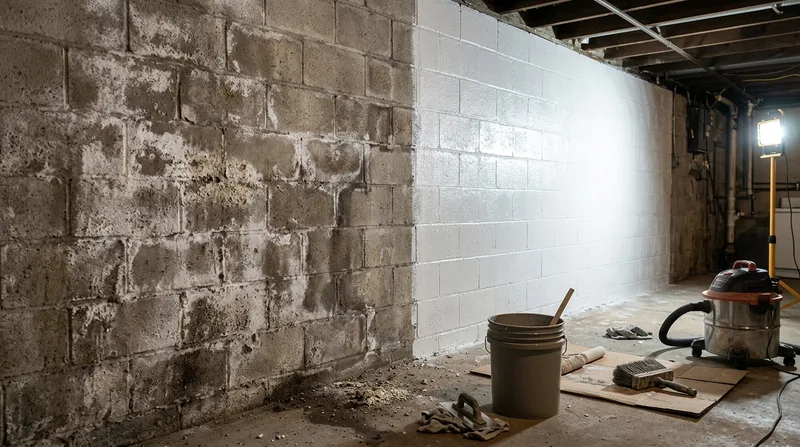




Basement Wall Sealing in Middletown
Basement Wall Sealing in Middletown is a targeted fix for damp, weeping foundation walls, not a cure for every wet basement. The township runs from the Raritan Bayshore up into the Navesink Highlands, and the water problems change with the ground under your house. Fieldstone and brick foundations on the old colonial lots near Middletown Village and along the Navesink pull groundwater through mortar joints. Poured-concrete walls in the 1980s and 1990s Colonials out toward Holmdel and Chapel Hill seep through hairline cracks and tie holes. Greensand marl clay holds water against the wall and drives hydrostatic pressure where the water table sits high near the bay and the creeks. We inspect the wall, test for moisture, and tell you whether sealing is the right answer or whether basement waterproofing is what you actually need.
Why Basement Wall Sealing Matters in Middletown's Older Housing Stock
Middletown has a wide spread of foundation types, and each one fails differently. The 1700s and 1800s homes in Middletown Village and along the Navesink sit on fieldstone and brick that were never meant to hold back a high water table. The post-war Capes, ranches, and split-levels in New Monmouth, Lincroft, and North Middletown have block basements that wick moisture through the block cores. The newer poured walls in Holmdel, Colts Neck, and Chapel Hill are tighter, but nor'easters, coastal surge on the Bayshore, and tropical downpours like Ida in 2021 push water against them hard. Sealing is the right first step when the wall is damp and chalky, not when water is standing on the floor.
- Efflorescence shows up as white powder on block and brick walls and tells you water is moving through the masonry.
- Damp patches and a musty basement smell after rain point to vapor movement through the wall face.
- Hairline cracks and tie holes in poured concrete let water in during freeze-thaw cycles and heavy rain.
- Peeling paint and crumbling parging on older fieldstone walls signal long-term moisture at the surface.
- Water at the wall-floor joint is usually a sign of hydrostatic pressure, and that is a drainage problem, not a sealer problem.
We remove the efflorescence, prep the surface, and apply a sealer that matches the wall material and the moisture load it actually sees.
Key info: A homeowner in Lincroft called us about white powder on a block wall in a 1962 split-level. The wall was damp but the floor was dry. Surface prep and a penetrating sealer fixed it. A call from Atlantic Highlands the same week was a different story: water at the cove joint after every storm, which needed an interior perimeter drain, not a sealer.
For official guidance on construction and drainage permits in the township, check the Middletown Township building department before you schedule work that alters drainage.
How We Seal Basement Walls in Middletown, Step by Step
Sealing a wall is not a spray-and-go job. We start by finding out why the wall is wet, because a sealer over an active leak just traps water behind the coating. The process below is what a typical Middletown wall sealing job looks like, whether the wall is fieldstone in Rumson or poured concrete in Chapel Hill.
- We walk the basement and the exterior grade, looking for downspout discharge, grading that slopes back to the wall, and window wells that hold water.
- We test the wall for moisture with a meter and map the damp areas, so we know whether the problem is surface condensation, vapor movement, or active seepage.
- We remove efflorescence, loose parging, and old failed coatings, then wire-brush and clean the surface so the sealer bonds to sound masonry.
- We fill cracks and tie holes with a hydraulic cement or epoxy patching material before any coating goes on.
- We apply the sealer, either a penetrating silicate product for masonry that needs to breathe or a membrane coating for walls that need a physical barrier.
- We extend downspouts and correct grading where that is part of the fix, then walk you through what we did and what to watch for.
If the inspection shows hydrostatic pressure or a failed footing drain, we say so and point you to the right repair instead of selling a sealer that will not hold.
Key info: On a 1920s Shingle-style home in Locust, the fieldstone wall was damp and chalky but sound. We repointed the mortar joints, removed the efflorescence, and applied a breathable sealer. On a 1990s Colonial in Holmdel, the poured wall had three vertical cracks leaking after nor'easters. Those got foundation crack repair with epoxy injection, then a sealer over the face.
If you are not sure which problem you have, start with a free basement inspection and we will tell you straight.
Sealing Methods We Use on Middletown Basement Walls
The right method depends on the wall material, the moisture source, and whether the wall needs to dry to the inside or hold back water from the outside. The table below lays out the options we use most often in Monmouth County homes.
| Approach | Description | Best for |
|---|---|---|
| Penetrating silicate sealer | Soaks into the masonry and reacts with the lime to block capillary water movement while letting the wall breathe. | Damp block and brick walls with efflorescence and no standing water |
| Cementitious membrane coating | A troweled or sprayed cement-based coating that bridges small cracks and gives the wall a physical barrier. | Fieldstone and rubble walls in Middletown Village that need a uniform surface |
| Elastomeric waterproof membrane | A flexible coating that stretches with minor movement and seals the wall face against vapor and seepage. | Poured concrete walls in Holmdel and Colts Neck with hairline cracks |
| Crack injection plus sealer | Epoxy or polyurethane injection fills the crack from the inside, then a sealer coats the wall face. | Active leaks through cracks and tie holes in poured walls |
| Exterior membrane and dimple board | A waterproof membrane applied to the outside face with dimple board protection, done when the wall is excavated. | Walls with exterior-side water pressure and failing original waterproofing |
We match the method to the wall and the water source, not to a sales target.
Basement Wall Sealing Cost in Middletown: What to Expect
Most basement wall sealing jobs in Middletown start around $1,500 for a single room or a partial wall, and the price climbs from there based on square footage, wall condition, and how much prep the surface needs. A damp block wall in a New Monmouth ranch is a smaller job than a fieldstone wall in Middletown Village that needs repointing before sealing. Cracks that need injection add to the total, and exterior work that requires excavation is a different scope entirely. We give you a written number after we see the wall, not over the phone.
Factors that move the price up or down:
- Wall area and ceiling height, since a full basement takes more material and labor than a partial one.
- Wall material, because fieldstone and brick need more prep than poured concrete.
- Efflorescence severity and how much failed coating has to come off before sealing.
- Crack count and whether injection is needed before the sealer goes on.
- Access to the wall, including whether the basement is finished and needs protection.
- Exterior corrections like downspout extensions or regrading that are part of the fix.
Get two or three estimates and compare scope, not just the bottom line. A low number that skips surface prep will fail early. Our pricing overview breaks down how we build a quote.
Basement Wall Sealing Near Me: How to Choose a Contractor Near Middletown
Hiring for below-grade work is different from hiring a painter. The contractor needs to understand water tables, hydrostatic pressure, and the difference between a sealer and a drainage fix. Ask questions before you sign anything, and do not be rushed by a one-day discount.
- Confirm the contractor is licensed and insured for residential waterproofing work in New Jersey, and ask for a certificate of insurance.
- Get at least two or three written estimates that spell out surface prep, materials, and what happens if the leak persists.
- Ask for references from Middletown or nearby towns and call them, especially for jobs on the same foundation type as yours.
- Ask who pulls any permit, since work that alters drainage or the sump discharge connection may need one from the local building department.
- Get the warranty terms in writing and confirm whether it is transferable if you sell the house.
We are a Basement Health Association member and we put our findings in writing. Reach out through our contact page to set up an inspection.
Key info: A homeowner in Hazlet got three quotes for a damp block wall. Two were within a few hundred dollars of each other and included efflorescence removal and crack filling. The third was half the price and skipped prep. The cheap job failed within a year, and the wall was wetter than before.
Basement Wall Sealing in Middletown: Pricing Guide
| Service | Price | Details |
|---|---|---|
| Single wall or partial basement | Starting at $1,500 | Includes surface prep, efflorescence removal, crack filling, and one sealer coat on a limited wall area. |
| Full basement, block or poured wall | Starting at $2,800 | Covers full perimeter prep and sealing; price moves with wall area, height, and coating type chosen. |
| Fieldstone or brick wall with repointing | Starting at $3,500 | Adds mortar repair and extra prep time; older masonry in Middletown Village drives the higher figure. |
| Crack injection before sealing | Starting at $650 per crack | Epoxy or polyurethane injection for active leaks; number of cracks and access determine the final total. |
| Complex or large-scale job | On estimate | Finished basements, exterior excavation, or multiple wall types need an on-site look before pricing. |
| Estimate | Free | On-site inspection and written quote within 24 hours at (848) 283-6870, no obligation to book. |
Indicative pricing, the exact cost depends on square footage, finish, and site access. Free personalized estimate within 24h at (848) 283-6870.


