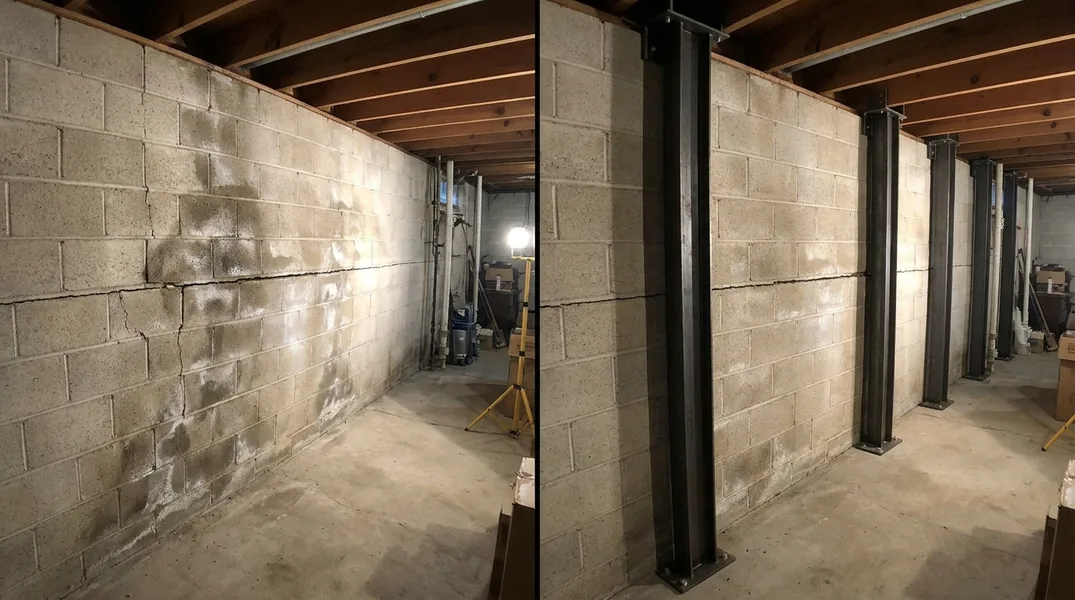
The Geology Behind Monmouth County Basement Leaks
If you live in Middletown or anywhere else in Monmouth County, you have probably noticed that basements here have a mind of their own. One house stays bone dry for decades while the one next door takes on water every spring. The difference is rarely the house itself. It is the ground underneath it, and Monmouth County sits on some of the most challenging soil in New Jersey.
The culprit is a layer of greensand clay, a dense, glauconite-rich marine deposit that runs through much of the county. Unlike sandy or gravelly soils that let water pass through, greensand clay acts almost like a sealed bowl. Rain and snowmelt soak into the topsoil, hit the clay layer, and stop. Water accumulates above it, and that water has to go somewhere. All too often, it goes against your foundation walls and under your slab.
Add a high water table to the mix and the problem compounds. In low-lying parts of Middletown and nearby towns, the water table can rise to within a few feet of the surface during wet seasons. When the soil around your foundation is already saturated, hydrostatic pressure builds up and pushes water through even hairline cracks, mortar joints, and porous concrete. That is why Basement Waterproofing here is less about patching a single leak and more about managing the whole site.
Why Greensand Clay Makes Groundwater Seepage Worse
Homeowners often assume that if the ground looks dry on top, the basement should be dry too. With greensand clay, that logic fails. The clay holds moisture for a long time and releases it slowly, which means your foundation can be under pressure for weeks after the last heavy rain. Groundwater seepage through the cove joint, where the floor meets the wall, is one of the most common symptoms we see. Water does not need a visible crack to get in; it can wick through the concrete itself.
Poor soil drainage makes everything worse. When the clay is compacted during construction, or when downspouts and grading push water toward the house instead of away, the soil never gets a chance to dry out. Over the years, this constant wetting and drying cycle weakens the foundation and widens existing cracks. In neighborhoods around Red Bank and Holmdel, where lots are often graded flat or slope gently toward the house, we routinely find that the soil is holding water against the foundation long after a storm has passed.
The practical takeaway is that surface fixes rarely last. Painting the inside of the wall with a sealer might hide the dampness for a season, but the pressure from the clay and the water table will find another way in. Real Foundation Waterproofing has to address where the water is coming from and give it a controlled path away from the structure.
Signs Your Middletown Basement Is Losing the Battle
Basement leaks in Monmouth County rarely announce themselves with a flood. More often, they show up as a white powdery stain on the wall, a musty smell that will not go away, or a damp patch near the floor after a heavy rain. Efflorescence, that chalky residue, is a sign that water is moving through the concrete and leaving mineral salts behind. Rusty nail heads, peeling paint, and warped baseboards are other quiet warnings that moisture is present.
If you notice any of these, it is worth having the situation looked at before the next wet season. Water damage compounds: a small seep can rot framing, ruin insulation, and create the humid conditions mold needs. Homeowners in Hazlet and across the county often tell us they wish they had acted sooner, because the repair was smaller and less expensive at the first sign of dampness. A professional inspection can tell you whether you are dealing with a simple surface issue or a groundwater problem driven by the clay and water table.
It also helps to think about timing. Late winter and early spring, when the ground is saturated and the water table is high, are peak leak season here. If your basement is damp in March and April but seems fine in August, that pattern is a strong clue that groundwater, not a plumbing leak, is the source.
Basement Waterproofing Near Me: Solutions That Work With This Soil
When homeowners search for basement waterproofing near me in Middletown, they usually want to know what will actually stop the water. The answer depends on the source. For water pushing up through the floor or seeping at the cove joint, an Interior Drain Tile System is often the most reliable fix. It captures water under the slab and at the base of the wall and routes it to a sump pump, so the pressure never has a chance to build against your living space.
When the problem is the soil itself, or when the foundation is showing structural wear, Exterior Basement Waterproofing can be the better long-term answer. That approach involves excavating down to the footing, applying a waterproof membrane, and installing drainage that directs groundwater away from the house. It is more involved, but it addresses the greensand clay and high water table at the source rather than managing the symptoms inside.
Many homes need a combination: exterior drainage to relieve the soil pressure and interior drainage to handle any water that still finds its way in. A good contractor will evaluate your grading, downspouts, foundation condition, and the water table before recommending a system. There is no single fix that suits every house in Monmouth County, and anyone who promises one should be treated with caution.
Basement Waterproofing Cost in Middletown: What to Budget
Cost is the question every homeowner asks, and the honest answer is that it varies with the size of the basement, the severity of the water problem, and the solution required. A straightforward interior drain tile installation is generally less expensive than a full exterior excavation, simply because there is less digging and disruption. Homes with finished basements or structural cracks may need additional work, which affects the total.
Rather than guessing, the best first step is a professional assessment. Middletown Waterproofing provides a free estimate so you can see exactly what your home needs and what it will cost before committing. You can also review general pricing guidance on our site to get a sense of the range. Keep in mind that delaying a repair usually costs more in the long run, because water damage to framing, drywall, and belongings adds up quickly.
It also helps to ask about warranties and ongoing maintenance. A sump pump needs testing, and discharge lines need to be kept clear, especially in a climate where the water table stays high for months. A reputable contractor will explain what is covered and what you need to do to keep the system working.
Protecting Your Home From the Ground Up
Living on greensand clay with a high water table does not mean you have to accept a wet basement. It means your home needs a waterproofing strategy designed for this specific ground. Simple steps help too: keep gutters clean, extend downspouts several feet from the foundation, and make sure the soil slopes away from the house rather than toward it. These measures reduce the volume of water the clay has to absorb right next to your walls.
If you have seen signs of seepage or dampness, do not wait for the next heavy rain to confirm it. Call Middletown Waterproofing at (848) 283-6870 to schedule an inspection and get a clear, no-pressure assessment of your basement. Serving Middletown and the surrounding Monmouth County communities, we understand the local soil and the local water table, and we can recommend a solution that fits your home and your budget.
Looking for a professional basement waterproofing contractor in Middletown? Middletown Waterproofing responds fast for all your basement waterproofing needs.
Get a Free QuoteOur services: Basement Waterproofing · Interior Drain Tile System · Exterior Basement Waterproofing