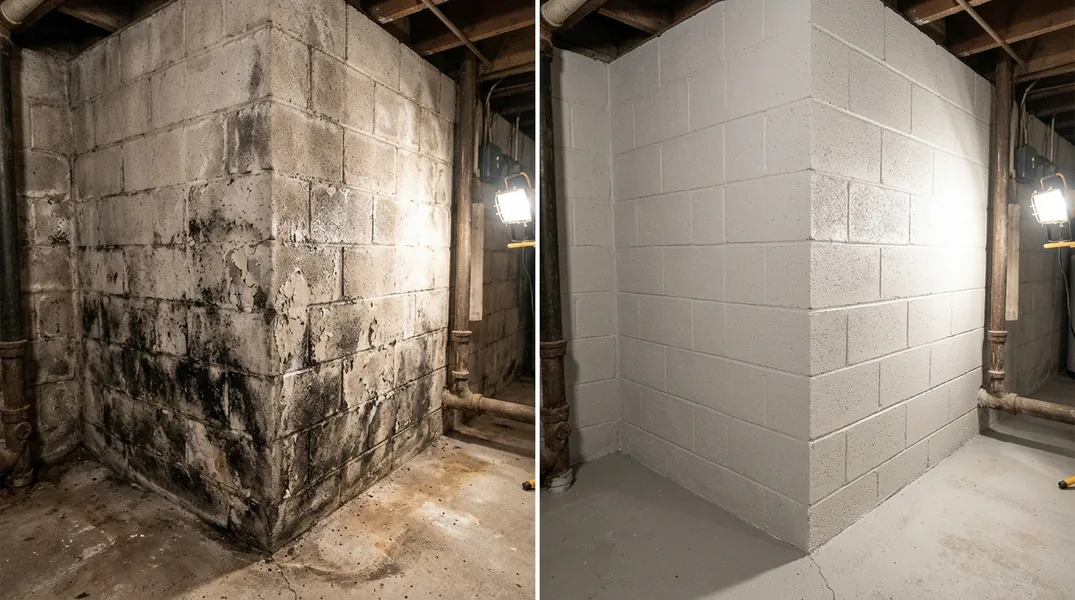
Why Middletown NJ Homeowners Face Basement Water Problems
Living in Middletown means enjoying the beauty of Monmouth County, but it also means dealing with a climate and soil conditions that can be tough on basements. The region's freeze-thaw cycles, heavy spring rains, and occasional nor'easters put constant pressure on foundations. Many homes here sit on clay-heavy soil that drains slowly, meaning water pools against the foundation instead of soaking away quickly. Over time, that moisture finds its way inside, leading to damp walls, musty odors, and eventually structural damage if left unchecked.
If you have noticed water stains, efflorescence (that white powdery residue), or a persistently damp feeling in your basement, you are not alone. Homeowners across Red Bank and Holmdel face similar issues. The good news is that modern waterproofing offers reliable solutions. The key is understanding the two main approaches, interior vs exterior waterproofing, and knowing which one fits your specific situation. This guide will walk you through both methods so you can make an informed decision for your home.
Interior Waterproofing: How It Works and When It Makes Sense
Interior waterproofing focuses on managing water that has already entered the basement. The most common system is an Interior Drain Tile System, which involves installing a drainage channel along the perimeter of the basement floor. This channel collects water that seeps through the cove joint (where the wall meets the floor) and directs it to a sump pump, which then discharges it away from the home. The system is typically installed by breaking up a narrow strip of concrete around the perimeter, laying the drain tile, and then re-pouring the concrete. It is a proven method that works well in most Middletown homes.
Interior systems have several advantages. They are generally less expensive than exterior excavation, can be installed year-round regardless of weather, and do not disturb your landscaping or driveway. They also come with lifetime warranties from many reputable companies. However, interior waterproofing does not address the source of the water on the outside of the foundation. It manages the symptom rather than stopping the intrusion at its origin. For many homeowners, that is perfectly acceptable and highly effective, especially when the goal is to keep the basement dry and usable. If you are considering this route, it is worth getting a free estimate to understand your options.
Exterior Waterproofing: Stopping Water Before It Gets In
Exterior Basement Waterproofing takes a different approach. Instead of managing water inside, it aims to prevent water from ever reaching your foundation walls. This typically involves excavating the soil around the perimeter of the home down to the footing, applying a waterproof membrane or coating to the exterior walls, and installing a drainage system (often a French drain or exterior drain tile) at the base. The excavated area is then backfilled with gravel and soil to promote proper drainage away from the foundation.
The main benefit of exterior waterproofing is that it addresses the root cause. By stopping water at the exterior, you protect the foundation itself from hydrostatic pressure and freeze-thaw damage. This can extend the life of your foundation and prevent costly structural repairs down the road. However, exterior waterproofing is more invasive and generally more expensive. It requires heavy excavation, can disrupt landscaping, driveways, and decks, and is weather-dependent. In some cases, it may not be feasible if there are obstructions like mature trees or additions too close to the foundation. For homeowners in Hazlet and surrounding areas, a professional assessment is essential to determine if exterior waterproofing is the right fit.
Drain Tile vs Exterior Membrane: Key Differences
When comparing drain tile vs exterior membrane, it helps to understand what each component does. Drain tile (whether interior or exterior) is a system of pipes or channels designed to collect and redirect water. An exterior membrane, on the other hand, is a physical barrier applied to the foundation wall to block moisture from penetrating. In many exterior waterproofing projects, both are used together: the membrane protects the wall, and the drain tile carries water away. Indoors, drain tile works with a sump pump to manage water that enters through the cove joint or cracks.
The choice between these methods often comes down to the specific problem you are facing. If your issue is water seeping through cracks or the cove joint, an interior drain tile system may be sufficient. If you are dealing with significant hydrostatic pressure, bowing walls, or water pooling against the foundation, exterior waterproofing with a membrane may be necessary. A thorough inspection by a qualified contractor can determine which approach will be most effective for your home. Many companies offer both options and can recommend the best solution based on your foundation type, soil conditions, and budget.
Basement Waterproofing Cost in Middletown: What to Budget
Understanding pricing is a critical part of your decision. Interior waterproofing systems are generally more affordable, with costs often ranging from a few thousand dollars to around $10,000 depending on the size of the basement and the complexity of the installation. Exterior waterproofing, due to the excavation and additional materials involved, typically costs more, sometimes two to three times as much as an interior system. However, the long-term value of protecting your foundation cannot be overstated.
It is important to get a detailed, written quote that outlines exactly what is included: the type of drain tile, the sump pump specifications, warranties, and any additional services like mold remediation or wall repair. Avoid contractors who provide vague estimates or pressure you into a quick decision. A reputable company will take the time to explain your options and help you weigh the pros and cons of interior vs exterior waterproofing. For a personalized assessment and transparent pricing, reach out to Middletown Waterproofing at (848) 283-6870.
Basement Waterproofing Near Me: When to Call a Pro
If you are searching for basement waterproofing near me, it is a sign that you have likely already noticed warning signs: water on the floor, damp walls, a sump pump that runs constantly, or a musty smell that never goes away. These are not problems that resolve on their own. Ignoring them can lead to mold growth, wood rot, and even foundation failure. The sooner you address the issue, the more likely you are to avoid costly repairs down the line.
A professional waterproofing contractor will start with a thorough inspection of your basement and foundation, looking for cracks, signs of water intrusion, and drainage issues. They will also consider the slope of your yard, gutter downspouts, and local soil conditions. Based on their findings, they can recommend the most appropriate solution, whether that is an interior drain tile system, exterior waterproofing, or a combination of both. For homeowners in Middletown and the surrounding communities, working with a local company that understands the specific challenges of the area is a smart choice. Call (848) 283-6870 to schedule your free estimate and take the first step toward a dry, healthy basement.
Looking for a professional basement waterproofing contractor in Middletown? Middletown Waterproofing responds fast for all your basement waterproofing needs.
Get a Free QuoteOur services: Basement Waterproofing · Interior Drain Tile System · Exterior Basement Waterproofing